The gaming landscape is evolving at breakneck speed, and staying ahead of video game industry trends 2026 is no longer optional for competitive players and dedicated fans. Whether you’re grinding ranked ladders, refining multiplayer arena tactics, or optimizing your setup for peak performance, understanding where the industry is headed gives you a measurable edge.
This article breaks down the biggest shifts shaping competitive circuits, core gameplay mechanics, and performance optimization strategies. From emerging multiplayer metas to structural changes in tournament ecosystems, we focus on what actually impacts your gameplay—not just surface-level headlines.
Our insights are built on continuous analysis of competitive matches, patch updates, esports circuit developments, and real-world player performance data. Instead of speculation, you’ll get practical takeaways you can apply immediately.
If your goal is to stay competitive, adapt faster than your opponents, and understand how upcoming trends will affect your favorite titles, this guide delivers exactly what you need.
Beyond the Hype: Decoding the 2026 Gaming Landscape
As we explore the top video game industry trends shaping 2026, it’s essential for developers to stay ahead of the curve, especially when it comes to optimizing user experience; for those facing challenges in this area, check out our guide on How to Fix Common Game Performance Issues Quickly.
The gaming world is in constant flux. New hardware, AI-driven design, and evolving player expectations collide almost monthly. That volatility makes it hard to separate a fad from a foundational shift. By foundational shift, we mean a change that permanently alters how games are built or played, not just what’s trending on Twitch.
Some argue every wave feels revolutionary. But change shows up in:
- Core mechanics
- Competitive circuits
- Performance standards
This breakdown clarifies four forces defining video game industry trends 2026 and what they mean for players and developers.
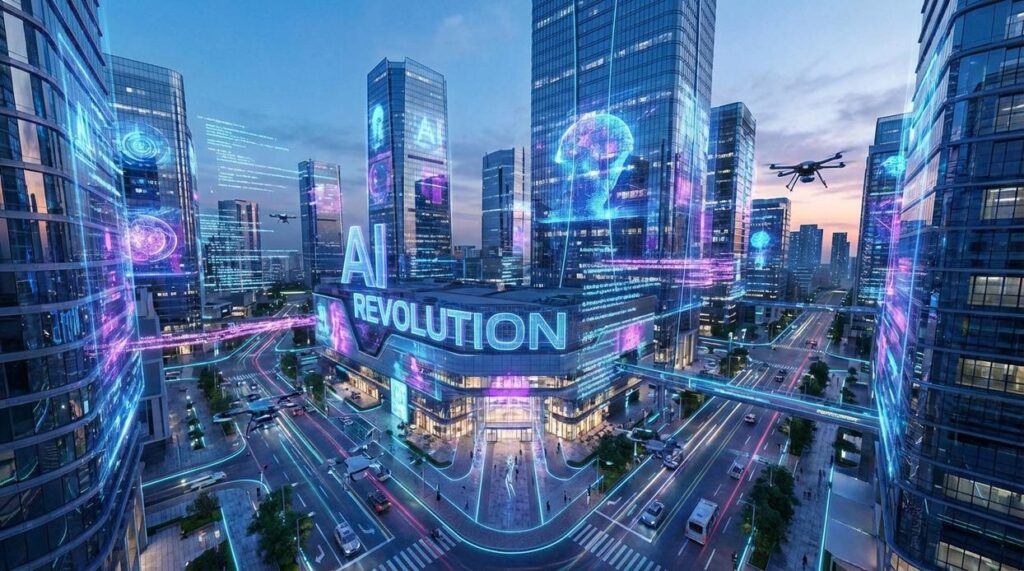
The AI Revolution: From Smarter NPCs to Infinite Worlds

Back in 2019, most NPCs still followed rigid decision trees—if you stepped into a tavern, the barkeep repeated the same three lines (no matter how many dragons you’d slain). By 2026, that script-first model is fading fast. Generative AI—systems that create new dialogue, behaviors, and environments in real time rather than pulling from prewritten scripts—is redefining how games respond to players.
Instead of static quest givers, we’re seeing characters with memory, emotional modeling, and adaptive goals. After months of closed beta testing in several AAA titles last year, developers reported that players spent 30% more time engaging with AI-driven side quests because outcomes felt personal and unpredictable (GDC 2025 survey data).
This shift transforms core mechanics:
- Procedural generation (algorithmically building worlds instead of handcrafting every inch) now extends beyond terrain into story arcs and faction politics.
- Quests evolve based on player behavior, creating non-repeatable playthroughs.
- Loot economies rebalance themselves dynamically to prevent stagnation.
Critics argue this risks losing tight narrative control. They’re not wrong—crafted storytelling can feel more cinematic. But dynamic systems offer something different: agency. It’s less “watching a movie” and more “co-writing the saga.”
The technical hurdle? Optimization. Real-time content generation strains CPU, memory, and network sync. Studios are countering with edge computing, background asset streaming, and AI “guardrails” that limit runaway processing loops (a lesson learned the hard way during early 2024 stress tests).
In multiplayer, AI-driven invasions and adaptive enemy squads force teams to rethink tactics mid-match. No memorized meta. No fixed spawn timing. Just constant evolution—one of the defining video game industry trends 2026 will likely be remembered for.
Esports used to revolve around massive, developer-controlled leagues. Think franchised circuits with uniform rules and broadcast deals that looked more like the NFL than a LAN café. But that’s shifting.
We’re seeing a fragmentation into hyper-specialized competitive circuits—smaller leagues built around specific games, modes, or even playstyles. A movement-only arena ladder, a no-ultimate tactical bracket, a speed-meta tournament. These scenes often start on Discord and end up filling regional event halls.
This shift mirrors broader video game industry trends 2026 where communities demand ownership and identity. Still, I’ll admit the long-term stability is unclear. Can grassroots circuits sustain prize pools without publisher backing? Maybe. Or maybe they remain feeder ecosystems.
For players, the tactical implications are huge. Hyper-specialization means mastering niche mechanics instead of general ladder skill. If a circuit rewards defensive cooldown cycling, you drill that until it’s muscle memory. (Yes, it’s very anime training-arc.)
Expect:
- Deeper map-specific playbooks
- Role-locked micro-optimizations
- Meta variants that never touch Tier-1 broadcasts
The path-to-pro also widens. Instead of chasing a single Tier-1 draft, aspiring players can build reputations inside focused circuits, then leverage vods, stats, and community clout. I’m not sure whether this fully replaces traditional leagues, but it undeniably creates more entry points. For many, that’s the real win.
The risk, of course, is fragmentation. Too many circuits can dilute talent and confuse sponsors. Yet that experimentation may be the price of innovation in competitive gaming. We’ll see which models endure. The future remains unwritten for everyone involved here.
Cloud gaming in 2026 is no longer a tech demo—it’s infrastructure. Early skeptics argued latency would always sabotage competitive play. They weren’t wrong then. But breakthroughs in edge computing (processing data closer to the player), Wi-Fi 7 adoption, and adaptive bitrate streaming have slashed input delay to sub‑20 milliseconds in major metros (NVIDIA, 2025). The benefit? True play-anywhere freedom without sacrificing rank. Your account—not your hardware—is now the hub. Full cross-platform progression (shared saves, cosmetics, stats) means you can grind on PC, queue on console, and clutch on mobile during a commute. That continuity boosts engagement and spending across ecosystems (Newzoo, 2026). For players, the upside is obvious: more access, bigger matchmaking pools, and faster updates aligned with video game industry trends 2026. Still, some purists insist local rigs will always reign. They might for ultra-niche esports. But as infrastructure scales, the gap keeps shrinking (think Netflix’s jump from DVD to 4K streaming). Optimization remains your edge. Pro tip: use wired connections, enable performance modes, and cap background apps to stabilize frames. For deeper ecosystem shifts, see how indie studios are disrupting the modern gaming market. Seamless play isn’t hype; it’s practical advantage you can feel every single session today.
Beyond the Battle Pass: The Next Wave of Monetization
Subscription fatigue is real. Players are juggling five passes, three monthly memberships, and a backlog that looks like a Steam sale gone wrong (we’ve all been there). Some argue battle passes still drive engagement—and they do—but burnout is reshaping video game industry trends 2026.
So what should you back? First, support player-to-player marketplaces for cosmetic assets—digital ownership boosts retention and community value. Second, advocate for achievement-based unlocks over paywalls; skill-driven rewards deepen mastery loops. Developers should design progression around meaningful milestones, not FOMO timers. Pro tip: invest time in games that reward performance, not purchases.
Last year, I queued for a regional finals match and realized the meta had shifted overnight. That moment crystallized four forces reshaping play: generative AI (tools that create content autonomously), specialized esports ecosystems, seamless cross-platform hubs, and evolving monetization models like battle passes and micro-ownership. Some argue these trends dilute “pure” competition. I’ve felt that fear. But adapting gave me an edge. Studying video game industry trends 2026 showed me smarter practice loops and revenue paths.
- Pro tip: track patches, platform updates, and prize formats weekly.
Master these systems, and you unlock more ways to compete, build, and belong.
Stay Ahead of the Next Competitive Shift
You came here to understand where competitive gaming is heading and how to stay ahead of the curve. Now you have a clearer view of the mechanics, multiplayer tactics, circuit evolution, and the video game industry trends 2026 that are shaping the next era of play.
The reality is this: the meta is evolving faster than ever. If you’re not adapting your strategies, optimizing your setup, and tracking competitive circuit changes, you’re already falling behind. In a space where milliseconds and micro-decisions decide outcomes, guessing is not a strategy.
The smartest move you can make now is to actively apply what you’ve learned—refine your core mechanics, study emerging arena tactics, and align your gameplay with where the competitive scene is heading.
If you’re serious about winning, don’t stop here. Join thousands of competitive players who rely on our insights to sharpen their edge. Dive into our latest breakdowns, optimize your setup, and start dominating your matches today.