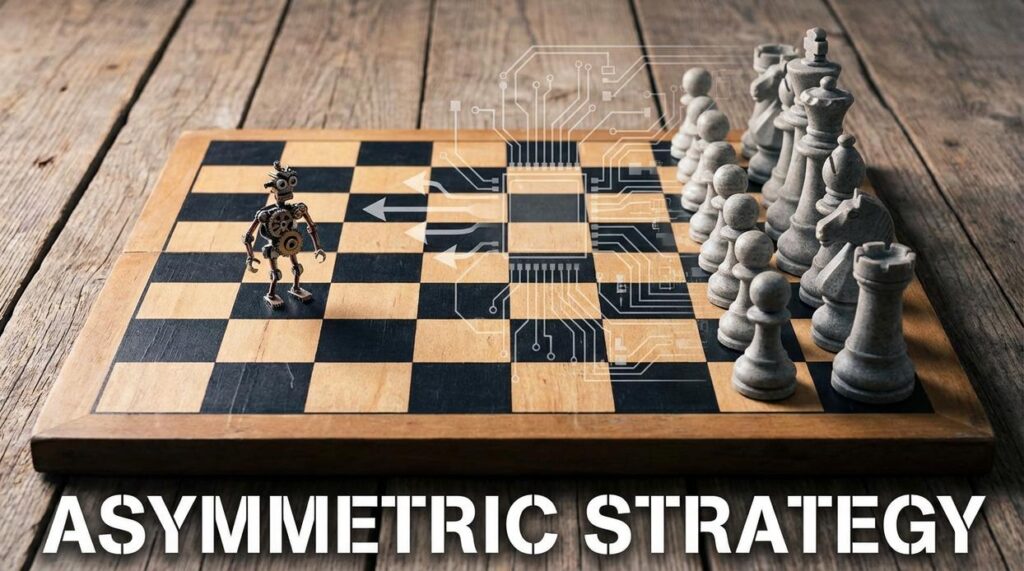
If you’re searching for sharp insights on the latest game industry buzz, smarter multiplayer arena tactics, and ways to gain a real competitive edge, you’re in the right place. This article breaks down the mechanics, metas, and mindset shifts shaping today’s most talked‑about titles—especially unique strategy games that demand more than quick reflexes.
Players often struggle to separate hype from mechanics that actually influence win rates. We focus on what truly impacts performance: core systems, balance updates, map control strategies, team compositions, and optimization techniques that translate into measurable in‑game results. Whether you’re climbing ranked ladders or refining your tournament play in Zero1 competitive gaming circuits, you’ll find practical takeaways you can apply immediately.
Our analysis is grounded in hands‑on gameplay testing, review of patch data, and close tracking of competitive trends. The goal is simple: give you clear, actionable insights so you can play smarter, adapt faster, and stay ahead of the evolving meta.
Beyond the Meta: Unlocking Your True Skill Ceiling
Most players plateau because they copy the meta—popular, statistically dominant strategies—without questioning the systems underneath. While some argue the meta exists for a reason (and they’re right, it reflects win-rate data), it only optimizes what’s already discovered.
Instead, deconstruct core mechanics: resource loops, risk-reward tradeoffs, and information flow. In unique strategy games, small rule quirks create outsized advantages. Think of it like Moneyball for competitive play—exploit what others ignore.
Moreover, test edge cases, not trends. Pro tip: track patch notes like design documents. Ultimately, thinking like a designer reveals ceilings others see.
Deconstructing the Core: How to Analyze a Game’s DNA
Most players obsess over patch notes. Weapon buffs. Nerfs. Meta shifts. But if you want a real edge, focus on the unchanging systems—the game’s “DNA.” That means understanding the physics engine (how movement and objects behave), input latency (the delay between your action and the server registering it), and core resource systems.
Moving Beyond Patch Notes
A physics engine determines whether momentum carries through a jump or resets instantly. That single truth shapes entire strategies. Input latency defines how aggressively you can peek corners online. If you’ve ever wondered why a play “worked in practice but not in ranked,” latency is often the culprit.
Case Study – Movement Mechanics
Take fast-paced shooters with slide-cancel exploits versus tactical shooters built around deliberate positioning. In the first, victory often comes from manipulating animation resets to break hit registration timing. In the second, it’s about minimizing exposure windows and controlling angles. The strategy isn’t better aim—it’s mastering how the movement system calculates risk. (Think chess, but everyone has rocket boots.)
Resource Loop Exploitation
Every game has a resource loop—earn, spend, upgrade, repeat. Some reward aggression with faster income. Others reward patience. In survival titles, “resource denial” flips the script: instead of farming gear, you prevent opponents from accessing it. Starve their loop, and you control the pace.
Optimization as a Weapon
Understanding rendering priorities and netcode can be decisive. Some visual cover doesn’t protect your character model server-side. Pro tip: test angles in private matches to confirm what the server recognizes as cover. Knowledge of these invisible rules turns optimization into a tactical weapon.
Asymmetrical Warfare: Dominating in Role-Based Arenas

I learned the power of asymmetry the hard way. In a ranked match that should’ve been even on paper, our opponents drafted a “weird” composition—double support, scaling carry, and a disruptive tank. We laughed. Ten minutes later, we couldn’t leave our base. That’s when I understood intentional imbalance—the idea that developers design roles with uneven strengths on purpose to reward coordination (and punish ego).
The Imbalance Advantage
In MOBAs and hero shooters, asymmetry means each class has distinct tools, power spikes, and vulnerabilities. The winning edge isn’t balance—it’s leverage. Teams that stack complementary strengths (vision control + burst damage + area denial) exploit design gaps the way a speedrunner exploits map geometry (yes, it’s that precise).
Some argue “just master mechanics.” Mechanics matter. But strategy multiplies mechanics. A mechanically average team with synergy will often outplay solo stars.
Psychological Drafting
Counter-picking is reactive. Psychological drafting is proactive. You build a composition that forces impossible choices:
- Engage comp vs. poke comp: fight or bleed slowly?
- Split-push threat vs. team-fight dominance: defend or group?
When I began drafting to create stress instead of just counters, enemy mistakes spiked. Decision fatigue is real (see Baumeister et al., 1998 on ego depletion).
Objective-Based Manipulation
Stop chasing kills. Manipulate rotations. Pressure two objectives simultaneously so the enemy must concede one. Pro tip: time waves and neutral spawns together to stretch their map presence thin.
Support Role as Shot-Caller
The support often has the widest vision coverage and least mechanical tunnel vision. In my climb, our healer called tempo—tracking cooldowns, summoners, and flank paths. Information advantage wins fights before they start.
If you love layered tactics in unique strategy games, revisit some cult classic games that deserve a comeback (https://zero1vent.net/cult-classic-games-that-deserve-a-comeback/). Sometimes the old blueprints explain modern dominance better than any patch notes.
Mastering Chaos: Strategy in Procedurally Generated Worlds
Procedurally generated games love to sell you on chaos. Every run is “totally random.” Every match is “unpredictable.” But here’s the contrarian truth: randomness is rarely random. It’s patterned uncertainty.
The Challenge of Randomness
In extraction shooters and roguelikes, players often obsess over map memorization. That’s outdated thinking. When layouts shift, memorized routes expire fast (like last season’s meta). The real skill is pattern recognition—the ability to detect recurring structures, spawn logic, and behavioral trends.
Procedural generation (algorithm-driven content creation) still follows rules. Enemies cluster near high-tier loot. Chokepoints form around exits. Sound cues travel predictable distances. Treat each run like data collection, not a dice roll.
The “Information Funnel” Strategy
Instead of reacting, reduce variables. I call this the Information Funnel—a method of narrowing possible enemy locations by stacking clues.
- Audio cues: footsteps on metal vs. dirt
- Environmental changes: opened doors, missing loot
- Player behavior: gunshots near extraction
Each signal tightens the funnel. In games like Hades and Escape from Tarkov, you’re not guessing—you’re eliminating.
Pro tip: Move with intention after every sound cue. Hesitation widens the funnel.
Risk vs. Reward Frameworks
Hot take: most losses aren’t mechanical failures. They’re emotional ones.
Before engaging, run a quick checklist:
- What’s the loot value?
- How far is extraction?
- What gear am I risking?
- Are enemies likely nearby?
Risk assessment beats ego every time (yes, even after that clean headshot).
Creating Predictability
Here’s the real power move: manufacture order inside chaos.
Make noise in one corridor. Plant traps near high-traffic zones. Force opponents into reactive play. When you control stimuli, you control movement.
Chaos isn’t your enemy. Passivity is.
The Innovator’s Mindset: Your Path to a Higher Rank
True strategic depth starts with understanding core mechanics—the fundamental rules and systems that govern how a game operates. Think cooldown cycles in MOBAs or economy loops in RTS titles. When you analyze asymmetrical design (where factions or characters have different strengths) and unpredictable systems like RNG, you stop reacting and start engineering outcomes.
Still stuck at a skill ceiling? That often happens when you copy meta builds without questioning why they work. (It’s like memorizing chess openings without understanding control of the center.)
So what’s next?
- Record your gameplay and review every decision.
- Identify one mechanic you can consistently exploit.
- Test variations instead of defaulting to popular strategies.
As competition rises in Zero1 competitive gaming circuits, innovation separates contenders from champions. The most powerful strategy isn’t a specific build. It’s a new way of thinking—one that turns every match into a system waiting to be solved.
Level Up Your Competitive Edge in Zero1
You came here to sharpen your understanding of game industry buzz, core mechanics, multiplayer arena tactics, and how to gain an advantage in Zero1 competitive gaming circuits. Now you have a clearer roadmap for optimizing performance, refining strategy, and staying ahead of shifting metas.
The real challenge isn’t finding information — it’s applying the right tactics before your opponents do. In high-stakes arenas and unique strategy games, hesitation costs wins. Falling behind on optimization, misreading core mechanics, or ignoring competitive trends can keep you stuck while others climb the rankings.
Your next move is simple: start implementing one optimization tweak, one tactical adjustment, and one meta-aware strategy in your next session. Track your performance. Refine. Repeat.
If you’re serious about dominating your matches and mastering unique strategy games, tap into the #1 trusted source for Zero1 competitive insights and proven multiplayer arena tactics. Don’t just play — compete smarter. Dive deeper now and start winning more consistently today.